Showing posts with label Dusky-blue Groundstreak. Show all posts

Thursday, January 1, 2026

Hairstreak Extravaganza at NBC, 12/31/25

I thought I was done with the blog for the year, but 2025 held on one more day with an explosion of hairstreaks.  After a couple of days in the 50s and then warming up to 70 today lots of butterflies were enjoying the sun and looking for something to eat.  Jim Snyder from College Station found the bug of the day with our second Black Hairstreak for the December.


Second best were two Telea Haistreaks on the same frostweed.  These were both better than the scruffy one I found a couple of days ago.


Several Silver-banded Haistreaks were out.


Rare Red-lined Scrub-Hairstreaks continue.


Marius Hairstreaks seem to be increasing in numbers.


I saw only one Clytie Ministreak.


Gray Haistreaks have recovered after being rare for most of the fall.


Here is the common lowly Mallow-scrub Hairstreak.


And the even more lowly Lantana Scrub-Haistreak.  It doesn't even get to have a tail.


Finally the tenth haistreak species for the day was Dusky-blue Groundstreak.  My all time high is eleven in one day.  I missed White Scrub-hairstreak and Clench's Greenstreak that were both seen today.


The National Butterfly Center recorded 138 species in December after a record November total of 141.  Hot sunny weather ahead so we should get 2026 off to a good start.

Sunday, July 13, 2025

National Butterfly Center, 7/13/25

Meanwhile......  With the summer rain, Stephanie and the crew at the National Butterfly Center have the place looking great.  Plants are lush and blooming and screaming for butterflies.  The warm, humid wind has been blowing pretty hard from the southeast the past few days, feeding the Hill Country flooding, and I was hoping it might bring up some of our rare summertime swallowtails.  Not super rare but this beat up Ornythion Swallowtail was appreciated.  It's had a tough trip from Mexico!


Our usual Western Giant Swallowtails are supeficially similar but obviously a much brighter yellow.  The marginal spots on the hind wing are also shaped differently.


My first butterfly of the day was this tasty Red-bordered Pixie.  I saw two today and a couple more were reported last week.  So they are back baby!


My other metalmark species for the day was a pair of Red-bordered Metalmarks.


Fiddlewoods were blooming nicely and attracting hairstreaks.  Here are the common Gray Hairstreak, Dusky-blue Groundstreak and Clytie Ministreak.


Beewise I got a lifer today.  This is the tiny Cobalt Small Carpenter Bee.  I have probbly seen them in the past and passed them of as a metallic sweat bee.  But thas bulbous abdomen is pretty distinct.  I wish I had gotten better photos.


I think this guy is a bee also but I have some research to do.  It looks familiar.


Thy've had a lot of rain in Mexico so it should be about time for the butterfly factories to send some beauties out way.  I need to start a weekly survey of the park.


Monday, February 10, 2025

Angled Leafwing at National Butterfly Center, 2-9-25

We had a very hard freeze in the Rio Grande Valley of south Texas in mid January with temperatures dropping to the mid twenties and staying below freezing for ten hours.  Two weeks ago I went over to the National Butterfly Center and found most plants heavily damaged.  A couple of hours turned up only four species of butterflies.  A return yesterday after a couple of weeks of warm weather found things looking much better.  Despite the very dry conditions, plants are leafing out as they do in February down here.  White Brush and Elbo Bush were blooming and attracting butterflies.  Best of my 25 species was this fresh Angled Leafwing.  I wonder if it's an offspring from the ones we had last November.


Tropical Leafwings were also out.


I found five pecies of hairstreaks but missed the Lacey's seen the day before. Here's a Silver-banded Hairstreak.


This Clytie Ministreak was lacking the red pigments making me wonder if it was something more exotic.  Nothing from Mexico in the field guide matched it.  It's just a weird Clytie.


Here's a more normal winter form Clytie.


The Dusky-blue Goundstreaks were looking sharp.


Even the common Gray Hairstreaks were nice to see after the recent freeze.


Orange Sulphur is always one of the first spring butterflies across Texas.

So spring is on the way and things are looking up.

  • Orange Sulphur 1
  • Lyside Sulphur 5
  • Little Yellow 5
  • Silver-banded Hairstreak 1
  • Gray Hairstreak 6
  • Mallow Scrub-Hairstreak 3
  • Dusky-blue Groundstreak 5
  • Clytie Ministreak 4
  • Ceraunus Blue 3
  • Reakirt's Blue 6
  • Fatal Metalmark 5
  • American Snout 20
  • Phaon Crescent 2
  • Red Admiral 6
  • Mexican Bluewing 2
  • Tropical Leafwing 6
  • Angled Leafwing 1
  • Brown Longtail 1
  • Funereal Duskywing 1
  • White Checkered-Skipper 5
  • Tropical Checkered-Skipper 5
  • Laviana White-Skipper 2
  • Common Sootywing 1
  • Southern Skipperling 1
  • Fiery Skipper 1


Monday, December 16, 2024

Just a normal December day at the NBC, 12/14/24

Warm breezy days in December and visiting butterfly watchers always make a good recipe for rare butterflies in the Rio Grande Valley of south Texas.  So I ran over to the National Butterfly Center hoping for something good; maybe the Barred Yellow seen yesterday.  There was nothing earth shattering but some pretty uncommon butterflies posed nicely for photos like this Blomfild's Beauty.


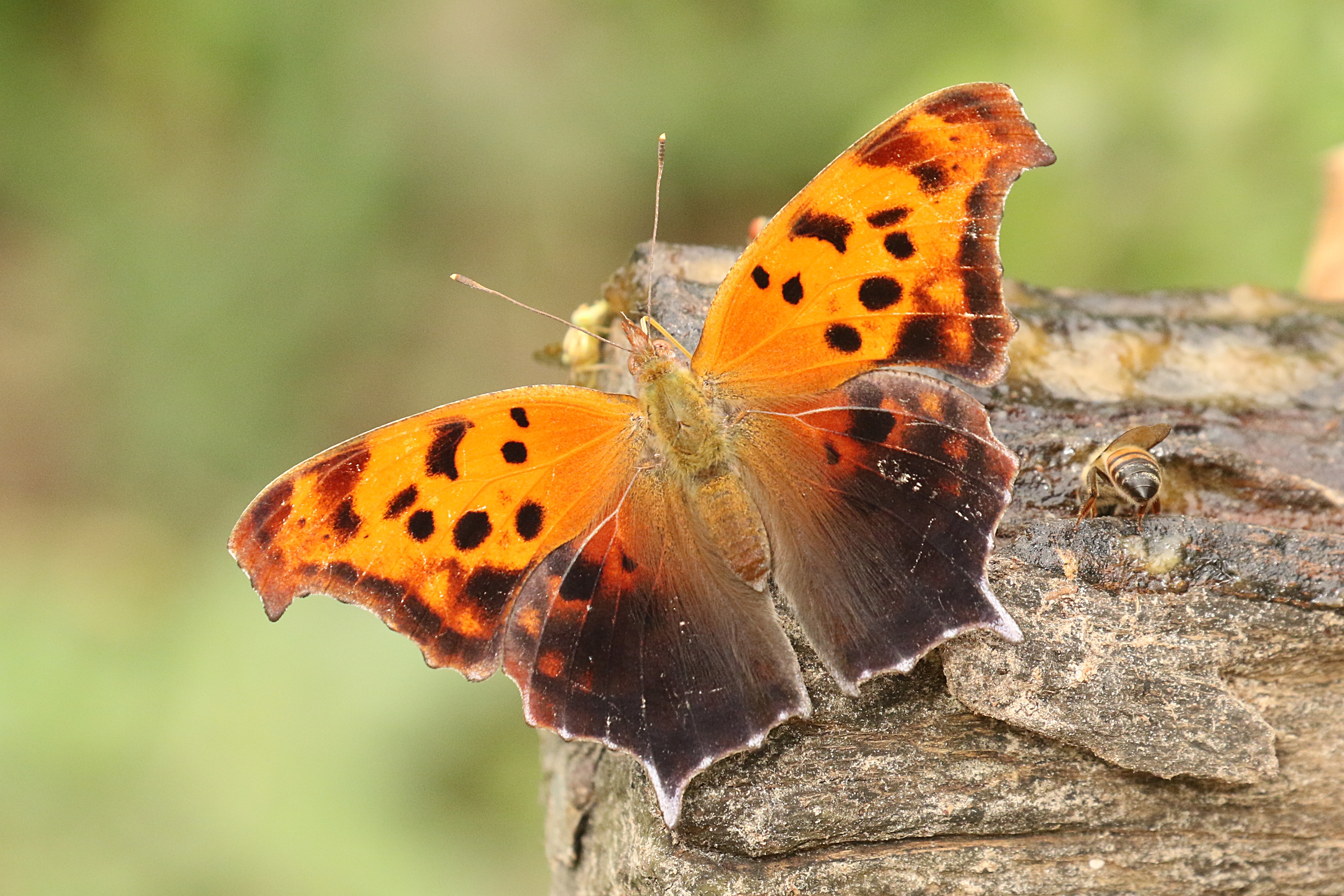
At the same bait log was this striking Question Mark.

Uusally Malachites are found at the bait logs so it was nice to find one nectaring of the purple Duranta.


Still a few Mexican Bluewings around.


Tailed Orange feeding on a flame acanthus.


The normally common Dusly-blue Groundstreaks have been hard to find this year.


We have still not had a strong cold front yet this winter.  Lowest temperature has been about forty so butterfly so butterflies are still on the wing and no real cold is in the forcast for the next ten days.  It is prime time for more rarites to show.

Tuesday, February 22, 2022

Ruddy Hairstreak? at Progreso Lakes, 2/22/22

After a lot of cold weather, things have warmed up for a few days and butterflies are out.  Our elbow bush is blooming up a storm and attracting a few hairstreaks so I paid extra attention to it today and got rewarded with a tiny little hairstreak that I instantly recognized as new for the yard.  It was the size of Ruddy Hairstreaks I have seen in the past though I was getting no orange color above.  After getting a bunch of photos I went into the house to look at them and come up with an ID.  It looked a lot like Ruddy Hairstreak though I didn't like how the post median band was so far from the thecla spot.  It looked much like Mathew's Hairstreak in Glassberg's book but that one has some pale cell end bars.  I posted the photos on Facebook and most agreed it looked like a Ruddy Hairstreak.  Muted Hairstreak is pretty much identical but seems to be very rare in the RGV.  Males can be separated by the color of the upper wings but we don't know how to ID females.

So in conclusion I'm calling it a Ruddy Hairstreak untill someone can prove different.  And either way it's yard butterfly #143.


Here's one of several Gray Hairstreaks form the same elbow bush.


And there were a couple of Dusky-blue Groundstreaks.


New for the year was this Turk's-cap White-Skipper.


Lots of copulating today.  Here's Gulf Fritillaries and Whirlabouts.


This winter form South Texas Satyr is pretty much spotless.


We had 31 species today but I'm to tired to make a list now.  More warm weather tomorrow.