Showing posts with label Common Streaky-Skipper. Show all posts

Saturday, August 22, 2026

West Texas Bug Trip, Part 1, 8/15-16/26

One of the things I wanted to do this summer was to make a trip out to the Davis Mountains for a couple of late summer tiger beetle species.  With the dog days of August having set in and every day here in the Rio Grande Valley of south Texas over hundred degrees lately it seemed like the time to go.  They also have been getting some rain out there and that was what I had been hoping for.  And maybe I could pick up some good butterflies.

So I took off early Saturday morning.  Traffic was moderate but moving smoothly and I made it up to San Antonio and west on I 10 with no issues.  My only bug stop was at Live Oak Creek in Western Crockett County west of Ozona to look for odes (members of the order Odonata, dragonflies and damselflies).

I arrived and found water over the shallow crossing but soon found that was the only water and the spot down stream where I had found Leonora's Dancers last year was completely dry with all the formerly emergent grass dead.  Apparently they had not had much rain this year.  I did manage to dig out a Leonora's Dancer.


And a couple of Variable Dancers.


But otherwise it was only a few common odes.  I moved on to Fort Stockton where I would stay the next few nights.  I usually stay in Alpine or Fort Davis when visiting the Davis Mountains but I thought I would try Fort Stockton as it is quite a bit cheaper with better dining options though a few miles farther from my bugging destinations.

Sunday morning when I stepped out of the hotel for a quick run out for breakfast I got sidetracked by my lifer Mesquite Girdling Beetle.

The goal for the day was to search Boy Scout Road, FM 1832 on the north side of the Davis Mountains  for Western Red-bellied Tiger Beetle and Black Sky Tiger Beetle.  Nancy Norman and Galen Stewart had seen both species there a few years ago.  And maybe I could pick up a few good butterflies and odes.

One of the nice things about insects is that they are exothermic and don't become active till things warm up.  Birds on the other hand, being warm-blooded, are up at the break of day and you need to be early to enjoy them.  The world of bug watching is more relaxed.  You don't have to get up so early.  So I didn't reach Balmorhea till 9AM and I finally got to FM 1832 about 9:30.  It was looking dry as I drove though the first few miles of ranch land.  Not good.

But at mile 6.0 there was a wash that was still muddy from recent rain.  I pulled over to check it out.  Tiger beetle city!  First was the common Ocellated Tiger Beetle.  There were several.


But it didn't take long till a green one popped up.  Black Sky Tiger Beetle!  I had seen many of these on the Willcox Playa last year in Arizona but this is a rarely reported species for Texas.


As it got warmer more and more tiger beetles popped out including more Black Skys.


And then a small red one with white stripes.  I had hoped for White-striped Tiger Beetle but all of the nearby records were found at night. Quite a few Texas bug watchers survive by black lighting, attracting insects to an ultraviolet light at night. They get a lot of their insects the easy way.   However I had seen them during the day in Arizona and didn't see why they wouldn't be out in the mud here in  westTexas.  And they were!  I even found a copulating pair which I'm not sure has been photographed in Texas.


I still needed the Western Red-bellied Tiger Beetle.  And a pair soon appeared.  I've seen lots of these in Arizona but these were my first for Texas.


Meanwhile the Black Sky Tiger Beetles were really going at it.  My timing was very fortunate to hit this spot right after a rain.


Proably 95% of the Black Sky Tiger Beetles were of the green morph.  But I also found dark green, black and blue morps.


Well I got three Texas lifer tiger beetles at my first stop.  I saw very few farther up the road.  The next stop at a muddy creek turned up a nice Aztec Dancer.


The next stop yielded Mexican Forktail and Arroyo Bluet.


There were a few common butterflies.  My best for the day were was this Tropical Least Skipper, only my second ever.


I stopped for lunch under a soapberry grove.  A couple of  migrant Virginia's Warblers were a nice distraction.  I have not seen many of these in Texas.


Near the end of the road before the gate to the Boy Scout ranch I found this cool Tenebrionid beetle, Stenomorpha opaca.


And a bunch of baby Red-spotted Toads.


A couple more good butterflies were Common Streaky Skipper and Acacia Skipper.


On the return trip I picked up this cool Filigree Skimmer.


Pretty goood day!  I returned to Balmorhea and checked out the Cueva de Oso restaurant.  It was really good.  Then I made a late afternoon run over to the Sandia Wetlands.  There was a not a lot going on.  It was really overgrown.  I tried to make this Eastern ringtail into some kid of a good southwestern ringtail species but it was not to be.


Well I cleaned up on tiger beetles.  Tomorrow I will look for butterflies in the high country.


Friday, March 6, 2026

Spring at National Butterfly Center, 3/5/26

Spring has sprung!  It is windy, dry and dusty in the Ruio Grande Valley of south Texas and trees are leafing out best then can despite the continuing drought.  The wind is screaming out of the south and the air is full of dust and pollen.  I'm itching all over, inside and out!  New arrivals today at the National Butterfly Center included this Florida White.  I think it's my first for the year.


Spreadwing skippers were abundant today.  Here's the first Sickle-winged Skipper I've seen in a while.


The four most common long-tailed Skippers popped in: Long-tailed Skipper (minus tails), Dorantes Longtail, White-striped Longtail and Brown Longtail.


And some of the little exotic spread-winged skippers:  Caballo Skipper, Common Streaky Skipper and Turk's-Cap White-Skipper.


Plenty of grass skippers too.  At least a half dozen Double-dotted skippers today.


Souther Broken-Dash has been numerous lately.


Here's a pair of cavorting Whirlabouts.


Finally got a Western Giant-Swallowtail.  Big butterflies ave been hard to come by,


An Elada Checkerspot was new but at the species' usual spot by the restrooms.  I am guessing this one hatched locally.  It's fun to speculate who is local and who blew in with the wind.


So I ran the Big Board species total up to 77 which is pretty good for five days into March.  Possible rain on the way!
  • Giant Swallowtail 1
  • Florida White 1
  • Checkered White 1
  • Southern Dogface 2
  • Large Orange Sulphur 5
  • Lyside Sulphur 3
  • Little Yellow 5
  • Mimosa Yellow 2
  • Mallow Scrub-Hairstreak 1
  • Dusky-blue Groundstreak 1
  • Cassius Blue 2
  • Ceraunus Blue 1
  • Reakirt's Blue 1
  • American Snout 12
  • Gulf Fritillary 1
  • Mexican Fritillary 1
  • Bordered Patch 1
  • Elada Checkerspot 1
  • Texan Crescent 8
  • Pale-banded Crescent 6
  • Red Admiral 1
  • Band-celled Sister 1
  • Mexican Bluewing 1
  • Common Mestra 3
  • Tropical Leafwing 3
  • Tawny Emperor 1
  • Queen 1
  • White-striped Longtail 2
  • Long-tailed Skipper 1
  • Dorantes Longtail 1
  • Brown Longtail 1
  • Coyote Cloudywing 1
  • Potrillo Skipper 1
  • Sickle-winged Skipper 1
  • Tropical Checkered-Skipper 10
  • Desert Checkered-Skipper 1
  • Laviana White-Skipper 6
  • Turk's-cap White-Skipper 1
  • Common Streaky-Skipper 1
  • Julia's Skipper 1
  • Fawn-spotted Skipper 1
  • Clouded Skipper 6
  • Double-dotted Skipper 6
  • Southern Skipperling 2
  • Fiery Skipper 2
  • Whirlabout 4
  • Southern Broken-Dash 6
  • Sachem 2
  • Common Mellana 2
  • Mexican Crescent 2

Wednesday, February 19, 2025

Vicroy's Ministreak and lots more at NBC, 2/18/25

One last warm breezy day before four cold days means the National Butterfly Center has the the potential to be hopping.  Bug of the day goes to this Vicroy's Ministreak found by Jeff Bryant, only the second I've ever seen.  BOA refers to it as Pebbly Ministreak.  Long though of as a varient of Gray Ministreak, the green eyes and pebbly scales are quite distinctive.  Jeff Glassberg described the new species and named it after his wife who passed away a few years ago, Ministrymon janevicroy.


Jeff Bryant also found this worn Mexican Crescent, the first one to be found since the freeze.


Chris Balboni found this female Silver Emperor, it's been years since I've seen one.


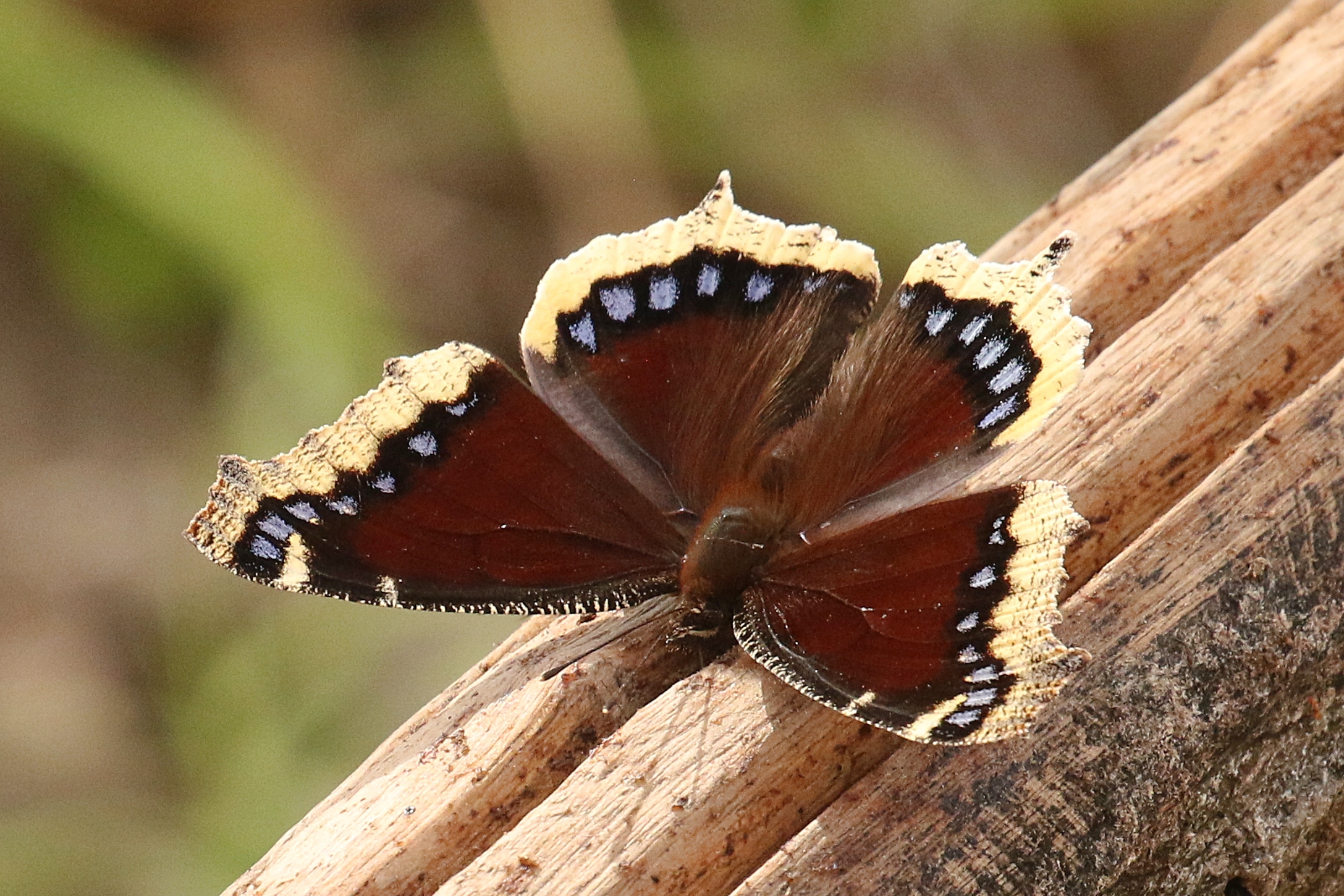
Two Mourning Cloaks would normally been the major find.  One was really fresh.  And one not so much.


Lots of Common Streaky-Skippers around lately.


My first Double-dotted Skipper since the freeze.


Desert Checkered-Skippers were out today.


The requisite Mexican Bluewing photo.


Here's today's list of 43 species which is pretty amazing for February.  The NBC list for the month is up to 73.

  • Pipevine Swallowtail 1
  • Orange Sulphur 1
  • Southern Dogface 3
  • Lyside Sulphur 12
  • Little Yellow 3
  • Sleepy Orange 1
  • Gray Hairstreak 5
  • Mallow Scrub-Hairstreak 3
  • Dusky-blue Groundstreak 3
  • Western Pygmy-Blue 3
  • Ceraunus Blue 3
  • Reakirt's Blue 5
  • American Snout 20
  • Variegated Fritillary 1
  • Bordered Patch 2
  • Texan Crescent 1
  • Vesta Crescent 1
  • Mexican Crescent  1
  • Phaon Crescent 5
  • Mourning Cloak 2
  • American Lady 1
  • Red Admiral 5
  • Mexican Bluewing 2
  • Tropical Leafwing 5
  • Silver Emperor 1
  • Queen 1
  • Funereal Duskywing 6
  • White Checkered-Skipper 20
  • Tropical Checkered-Skipper 5
  • Desert Checkered-Skipper 2
  • Laviana White-Skipper 3
  • Common Streaky-Skipper 5
  • Clouded Skipper 1
  • Double-dotted Skipper 1
  • Southern Skipperling 2
  • Fiery Skipper 5
  • Whirlabout 1
  • Sachem 1
  • Common Mellana 1
  • Nysa Roadside-Skipper 2
  • Celia's Roadside-Skipper 2
  • Eufala Skipper 2
  • Vicroy's Ministreak 1